

Is Trading Halal or Haram in Islam?
Explore whether trading is halal or haram in Islam 🕌. Learn key rules, ethical guidelines, and what Muslim traders in Pakistan should consider 📈💼.
Edited By
Benjamin Carter
Leverage trading allows investors to use borrowed funds to increase their buying power, often doubling or even tripling their market exposure. It’s popular in markets like stocks, forex, and commodities. However, for many Pakistani Muslim investors, a key question arises: Is leverage trading halal? This question is not simple, as Islamic finance principles strictly regulate interest (riba), excessive risk (gharar), and gambling (maysir).
In Islamic finance, earning profit must be free from prohibited elements like riba, which is any guaranteed interest on loans. Leverage trading often involves paying or receiving interest on borrowed amounts if positions are held overnight. That practice directly conflicts with the prohibition of riba under Shariah law. For example, if you borrow Rs 1 lakh to trade shares and pay interest on that loan daily, the interest charged can be considered riba.

Besides interest, the risk profile of leverage trading raises concerns. Using borrowed money amplifies gains but also magnifies losses, sometimes beyond the initial capital. Such speculation with high uncertainty resembles gambling, which Islam forbids. The principle of risk-sharing and transparency is core to halal trading; speculative leverage often breaches these ethics by exposing traders to unknown and disproportionate risks.
Islamic scholars often emphasise that any financial activity involving guaranteed returns on borrowed capital or excessive uncertainty fails to meet Islamic standards.
Some Islamic scholars suggest that leverage trading can be permissible only if:
It is done through Islamic finance institutions that offer Shariah-compliant contracts without interest
Overnight positions do not attract interest or swap charges
The trading is transparent and free from deceit or unfair advantage
Currently, few conventional brokerage firms in Pakistan offer such Shariah-compliant leverage products. Instead, many Muslim investors prefer alternatives like Mudarabah or Musharakah, which follow profit and loss sharing models.
In the following sections, this article will explore more deeply the principles behind halal trading, analyse the risks and riba factors with detailed examples, present opinions of notable Islamic jurists, and lay out practical approaches for investors seeking Islamic-compliant trading options in Pakistan.
Leverage trading allows investors to increase their exposure to financial markets using borrowed funds. Instead of investing only their own capital, traders borrow money to control a larger position. This magnifies potential profits but also risks, making it essential to understand how leverage works before participating.
Borrowing to increase investment exposure means a trader puts down a fraction of the total trade value to open a position. For instance, if you want to buy shares worth Rs 100,000 but only have Rs 10,000, you can borrow the remaining Rs 90,000 as leverage. This approach increases the size of your investment but also the risk. The borrowed funds come from brokers or platforms that offer margin trading services.
Common markets and platforms offering leverage include forex, stocks, and commodities. Forex trading is famous for high leverage options, sometimes as much as 100:1 or more. Stock markets also provide margin accounts, though normally with lower leverage, such as 2:1 or 5:1. In Pakistan, several brokers provide margin trading, but leverage is usually controlled more strictly compared to international platforms.
Examples of leverage ratios and their impact help to illustrate risk and reward. For example, a 10:1 leverage means a Rs 10,000 investment controls Rs 100,000 worth of assets. If the asset gains 5% in value, your actual return can be 50% on your initial capital. However, if the asset drops 5%, your loss also multiplies to 50%, which can quickly deplete your money.
Potential for amplified profits is the main attraction of leverage trading. Because you control a bigger position, even small market moves can mean significant gains. For example, if you invest Rs 20,000 with 10:1 leverage, controlling Rs 200,000, a 3% market rise boosts your return by Rs 6,000 instead of Rs 600 without leverage.
Higher chances of significant losses come with the same scale. If the market moves against your position, losses grow faster than your initial capital. In some cases, you may lose your entire investment much quicker than expected, which makes risk management crucial.
Margin calls and liquidation risks add pressure to leveraged trades. Brokers require a minimum margin in your account to keep positions open. If losses reduce your equity below this level, a margin call demands more funds. Failure to meet this can force brokers to close your position, potentially locking in a loss.
Leveraged trading offers a double-edged sword — increased profits with equally increased risks. Understanding these mechanics is vital before engaging, especially within the context of Islamic finance principles.
Overall, grasping how leverage works and its potential outcomes helps investors make informed decisions. It also provides a foundation to evaluate whether such trading fits within the halal framework discussed later in the article.
Understanding Islamic finance principles is essential when evaluating whether leverage trading fits within a halal framework. These principles provide clear guidelines on what makes a financial transaction permissible or forbidden under Shariah law. They aren't just theoretical rules but practical standards that shape Islamic banking and investment sectors worldwide, including in Pakistan.
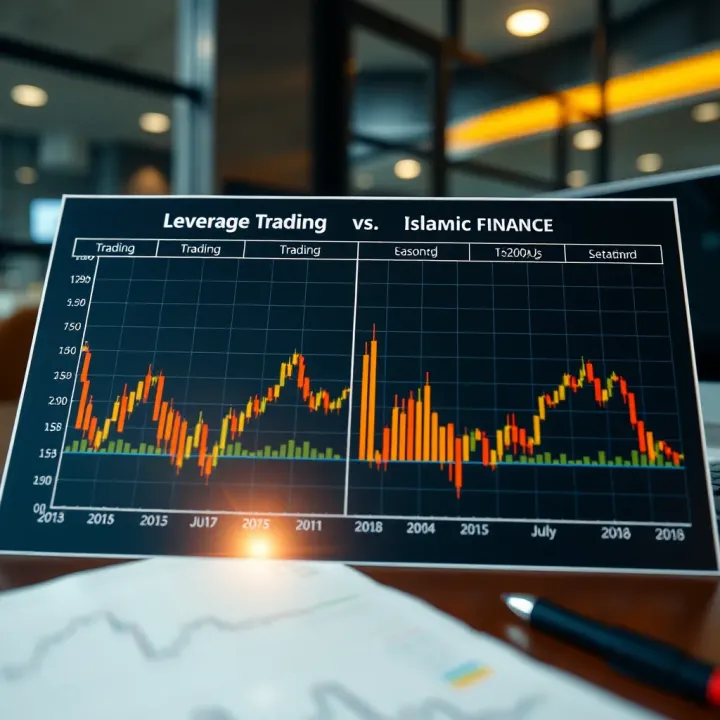
At the core of Islamic finance are three key prohibitions: riba, gharar, and maysir. Riba refers to any guaranteed interest on lending money, which Islam strictly forbids. For example, banks charging interest on loans or any trade where the payment involves added guaranteed gain fall under riba, making them haram.
Gharar means excessive uncertainty or ambiguity in a contract. Suppose someone sells a product without full knowledge of its quality or existence, that deal displays gharar. This ban aims to prevent deceit and unfair risk distribution in transactions. Maysir, or gambling, is likewise forbidden to avoid earning money through pure chance rather than effort or trade. Hence, speculative trading that resembles gambling may breach this principle.
Islamic contracts must be free from these elements to be valid and halal. They should also involve clear terms agreed upon by both parties without coercion or deceit. Transparency in price, delivery, and product details is crucial. For instance, a sale contract in Pakistan’s real estate market that clearly states property specs and payment timelines meets these criteria, whereas unclear advance payments with vague deliverables do not.
Islamic views on debt appreciate the need for borrowing but stress that debt should not involve riba. Borrowing money without interest or with profit-and-loss sharing aligns more closely with Shariah. In practice, Islamic finance promotes risk-sharing models like mudarabah or musharakah instead of interest-based loans. This perspective challenges conventional leverage trading because the borrowed amount usually involves interest.
Trading and speculation are permissible in Islam, provided they do not cross into maysir or gharar territories. Buying and selling assets to earn profit is allowed, as seen in Pakistan’s stock market where many Muslims invest in Shariah-compliant stocks. However, gambling-like bets on price movements without ownership or with excessive uncertainty are not consistent with Islamic teachings.
In sum, Islamic finance encourages ethical trading that avoids interest, speculation resembling gambling, and ambiguity, supporting fair and transparent market practices.
Leverage trading poses several challenges when viewed through the lens of Islamic finance. These challenges mainly stem from the principles aimed at ensuring fairness, transparency, and avoidance of unjust gain. Understanding these difficulties helps Muslim investors in Pakistan make informed decisions that align with their faith while navigating modern financial markets.
When traders use leverage, they borrow funds to increase their position beyond their own capital. This borrowing usually comes with an interest charge, known as the borrowing cost or margin interest. For example, if someone opens a forex position using leverage, they pay interest for the borrowed amount each day the position remains open. This interest directly results from the leverage lending arrangement.
This practice introduces the concept of riba, or interest, which Islam strictly prohibits. Riba implies earning money without any actual effort or trade, simply from lending. Since leverage trading typically involves paying or receiving interest on borrowed capital, it conflicts with the Shariah principle forbidding riba. This prohibition aims to avoid exploitation and unfair accumulation of wealth without productive economic activity.
Another concern arises from gharar, meaning excessive uncertainty or ambiguity in contracts. Leverage trading involves high risk, especially with margin calls and forced liquidation. For instance, if the market moves against a leveraged position, a margin call demands additional funds to keep the position open. Failure to meet this demand leads to automatic liquidation, often without the trader’s direct control. This unpredictability and obligation create gharar, which Islamic law seeks to minimise to protect parties from unjust harm.
Moreover, highly speculative trades using leverage can resemble gambling (maysir) because they depend heavily on chance and short-term market fluctuations rather than genuine economic activity or long-term investment. Engaging in such speculative behaviour contradicts Islamic teachings that discourage games of chance and encourage responsible, value-based trading.
In summary, leverage trading's inherent interest charges and exposure to uncertainty and speculation present significant hurdles under Islamic law, making it generally problematic for observant Muslim investors.
This understanding prompts many Shariah scholars to recommend caution or avoidance of conventional leverage trading and to consider halal alternatives that comply with Islamic finance principles.
Islamic scholars play a vital role in guiding Muslim investors by interpreting religious texts to clarify whether financial practices, like leverage trading, comply with Islamic law (Shariah). Their fatwas—official legal opinions—carry practical weight in Pakistan, where many traders rely on these rulings to avoid prohibited activities such as riba (interest) and maysir (gambling). Understanding these opinions helps investors make informed decisions that align with their faith without compromising financial goals.
Traditional scholars generally view leverage trading with caution, often rejecting it due to the interest component embedded in borrowing funds. Since leverage involves borrowing capital, the associated interest payments contravene the prohibition on riba. For example, if a trader uses margin to buy shares but must pay interest on the borrowed amount, this conflicts with Islamic principles. This conservative stance reflects a strict adherence to established prohibitions, aiming to protect investors from unknowingly engaging in forbidden transactions.
Beyond interest, these scholars stress avoiding excessive risk and uncertainty, which they link to gambling (maysir). Leverage trading inherently carries high volatility and potential losses beyond initial investments, making it resemble speculation or gambling. For instance, margin calls can force sudden liquidation of positions, causing unpredictability and stress. The emphasis on steering clear from gambling aims to preserve ethical conduct and financial stability for Muslim traders.
Recent discussions have considered how structured Islamic financial products might offer forms of leverage compliant with Shariah. These products avoid interest by using profit-and-loss sharing models, such as mudarabah (partnership) or murabaha (cost-plus financing). Some Islamic banks and brokers have developed margin accounts based on these principles, adjusting contracts to eliminate conventional interest charges.
Additionally, some contemporary scholars propose that leverage could be halal if strict conditions are met—such as prohibiting interest, limiting risk exposure, and ensuring transparency. For example, a trader might use leverage provided through Shariah-compliant financing whereby the cost to the client is a fixed service fee instead of interest. This emerging view provides Muslim investors with more flexibility, allowing participation in markets with leverage while respecting religious boundaries.
Both traditional and modern fatwas serve as valuable guides, but investors must verify the credibility of financial products and consult qualified scholars to ensure compliance.
Understanding the evolving landscape of Islamic finance helps Pakistani traders navigate complex leverage options responsibly, balancing profit opportunities with their religious obligations.
Muslim investors in Pakistan often seek alternatives to conventional leverage trading due to concerns over interest (riba) and excessive risk, which are not in line with Islamic finance principles. These alternatives provide options that comply with Shariah law while still allowing participation in financial markets. Exploring such options is crucial for investors who want to align their investments with their faith without sacrificing potential growth.
Islamic margin accounts differ from conventional margin trading by eliminating interest charges on borrowed funds. Instead of paying riba, traders may engage in arrangements such as profit-and-loss sharing or fee-based services approved by Shariah scholars. This structure helps avoid the key Islamic prohibition of interest, making margin trading accessible to practising Muslims who prefer compliant financial products.
Pakistani financial institutions and brokerage firms have started to introduce Islamic margin trading accounts and Shariah-compliant products. For example, some brokerage houses registered with the Pakistan Stock Exchange (PSX) offer accounts where margin financing is structured as Islamic financing based on Murabaha or Tawarruq contracts. In the banking sector, several Islamic banks—including Meezan Bank and BankIslami—provide investment accounts that support Shariah-compliant trading without conventional interest.
Investors can also consider Sukuk (Islamic bonds), Islamic mutual funds, and stocks screened for Shariah compliance. These instruments avoid leverage altogether, focusing instead on profit sharing, asset-backed financing, and businesses following Islamic guidelines. Sukuk backed by real assets provides regular income while staying free from riba concerns.
For retail investors, these options are safer and easier to manage, though they may offer lower short-term returns compared to leveraged trades. Moreover, liquidity can be a limitation; unlike leveraged forex or equities trading, Sukuk and Islamic funds may require holding periods before you can redeem investments. Still, they provide a transparent way to grow wealth while meeting religious guidelines, which many Pakistani investors appreciate.
Exploring these alternatives not only helps avoid prohibited practices but also supports development of Pakistan's Islamic finance sector, enhancing investor confidence and market stability.
Overall, Islamic margin trading and Shariah-compliant investment products offer practical routes to participate in Pakistan's financial markets without compromising religious beliefs. Choosing these options involves weighing risk, returns, and compliance, but they offer a balanced and ethical approach to investment for Muslim investors.
For Muslim investors, navigating the complex world of leverage trading requires a careful understanding of both financial risks and Islamic principles. This section offers practical advice to help balance profit goals with religious obligations, ensuring investments remain within Shariah boundaries.
It is vital for investors to consult knowledgeable Islamic scholars who specialise in contemporary finance. These experts provide tailored guidance on whether specific leverage trading practices comply with Shariah law. Since interpretations can vary, speaking directly with scholars familiar with financial instruments helps investors avoid doubtful or forbidden transactions. For example, a scholar might clarify whether a broker's margin trading involves riba (interest) or gharar (excessive uncertainty), making compliance clearer.
Selecting brokers who provide Shariah-compliant trading accounts is a practical step to avoid haram elements. Many Pakistani and international firms now offer Islamic margin trading or swap-free accounts that do not charge interest on borrowed funds. Using such brokers reduces the risk of engaging in impermissible practices unintentionally. Traders should always review the broker’s terms carefully, verifying features such as the absence of interest charges and strict adherence to halal trading guidelines.
Strong risk controls help Muslim investors stay within acceptable limits while pursuing profits. This includes setting clear stop-loss orders and avoiding excessive leverage that can lead to forced liquidations. For instance, rather than using very high leverage ratios like 1:100, investors might prefer moderate ratios such as 1:5 or 1:10 to manage exposure responsibly. Careful position sizing and diversification also assist in reducing the chance of losses that contradict Islamic prudence against gharar.
Investors concerned about the high risk and potential non-compliance of conventional leverage trading can explore safer options. Islamic funds, profit-sharing Sukuk (Islamic bonds), or Shariah-compliant stocks allow participation in markets without excessive risk or interest. For example, investing in local Shariah-compliant equity funds provides growth potential while avoiding leverage's pitfalls. Such alternatives offer a balanced path aligning financial goals with Islamic ethics.
Practical guidance helps Muslim investors confidently approach leverage trading without compromising their faith or financial security. Combining expert advice, responsible broker selection, and prudent strategies keeps trading halal and sustainable.
Explore whether trading is halal or haram in Islam 🕌. Learn key rules, ethical guidelines, and what Muslim traders in Pakistan should consider 📈💼.

📊 Discover the best trading platforms for Pakistani traders! Compare fees, security, usability & support to find your perfect match for smarter trading decisions.

Learn how to trade CFDs in Pakistan 📈 with our detailed guide covering markets, strategies, risk management, legal tips, brokers, and taxes. Start smart!

Discover top trading platforms for Pakistani investors 📈. Compare fees, security, and features to find the best fit for your investing style and goals.
Based on 14 reviews