

Gold Rates in Pakistan: What Buyers Should Know
💰 Discover what influences gold rates in Pakistan 🇵🇰, learn how prices change daily, and get smart tips for buying gold wisely in local markets.
Edited By
William Price
Larry Fink, as CEO of BlackRock, oversees an asset management firm with over $9 trillion in assets under management, making it the largest globally. His leadership extends beyond numbers; he shapes how markets think about investment risks and opportunities, especially around environmental, social, and governance (ESG) factors.
Since founding BlackRock in 1988, Fink has steered it from a modest bond investment boutique to a dominant force influencing global capital flows. For Pakistani investors and financial analysts, understanding his approach offers insight into trends that affect not only international markets but also emerging economies.
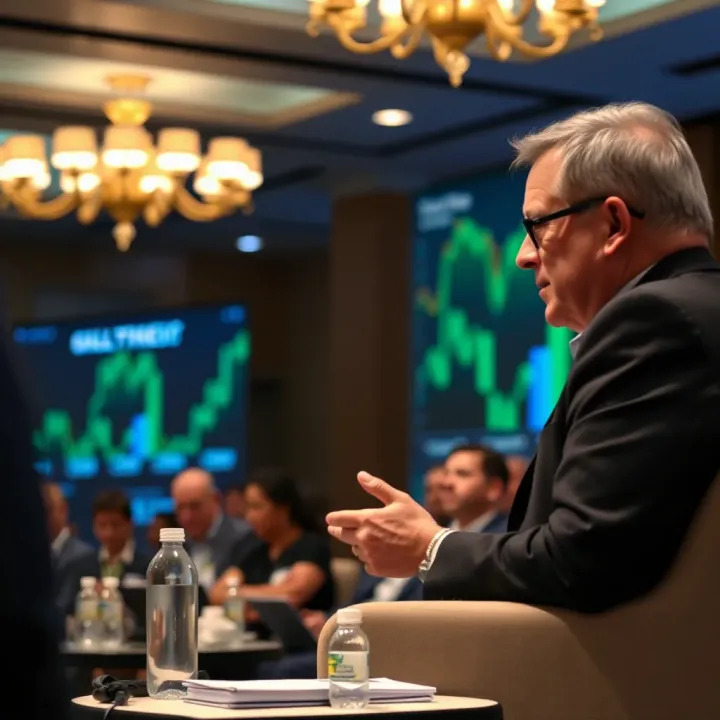
Fink’s focus on ESG investing reflects a shift in how finance integrates sustainability. For example, BlackRock's annual letters to CEOs have pushed companies worldwide to prioritise climate risks, diversity, and governance transparency. These calls have prompted firms to reconsider long-term value beyond quarterly earnings.
He also emphasises technology’s role in investment decisions. BlackRock’s Aladdin platform uses big data and analytics to help clients manage portfolios and assess risk more precisely. This technology-driven insight is shaping the future of asset management across Pakistan’s growing financial sector.
Among economic themes Fink addresses are global monetary policies, trade dynamics, and the challenge of balancing growth with sustainability. His perspective supports informed decision-making for Pakistani traders and policymakers navigating international capital markets and regulatory changes.
"Climate risk is investment risk," he stated plainly, shifting how many view portfolios from simple profit machines to agents of broader social responsibility.
Key takeaways relevant for Pakistan include:
The growing importance of ESG criteria in attracting international investment.
The impact of global financial policies on emerging markets like Pakistan.
The need to integrate technological tools in managing portfolios effectively.
Understanding Larry Fink’s leadership helps Pakistani finance professionals anticipate shifts and align investment strategies with global trends in sustainable finance.
Larry Fink's early experiences and career choices laid the foundation for his remarkable influence in global finance today. Understanding his background reveals how his practical mindset and foresight shaped the strategies driving BlackRock's growth. This section explores Fink's education, early roles, and the key moments leading to the establishment of BlackRock.
Larry Fink graduated with a degree in political science from the University of California, Los Angeles (UCLA), which sharpened his analytical skills and understanding of socio-political trends. Later, he earned an MBA from the UCLA Anderson School of Management, where he focussed on finance and developed a strong grasp of investment strategies.
After completing his education, Fink started his career at First Boston, an investment bank, in 1976. His early work involved bond trading, a field that was then evolving rapidly. He notably pioneered the use of mortgage-backed securities (MBS), which are pools of home loans bundled and sold as investment products. This innovation was pivotal in transforming debt markets and eventually influenced global financial practices.
His grasp on risk management deepened, and he soon became head of the bond department, demonstrating his skill in navigating complex financial products. This experience proved essential, particularly during the 1987 stock market crash when he helped manage the firm's exposure, preserving capital and building trust.
In 1988, Fink, along with seven partners, founded BlackRock as part of Blackstone Group. They aimed to offer sophisticated risk management and fixed income investment solutions to institutional clients. Initially, BlackRock was a small firm focused largely on bond management, but its innovative approach allowed it to quickly build credibility.
BlackRock’s turning point came as it expanded into diversified asset management services, aggressively investing in technology to improve portfolio analytics. This tech edge helped the firm advise governments, pension funds, and insurers with precision. The acquisition of firms like Barclays Global Investors further boosted its scale, making BlackRock the world’s largest asset manager with trillions under management.
Fink’s vision to blend technology with financial expertise transformed BlackRock from a niche player into a dominant global force. Its growth strategy, centred around risk control and client transparency, attracted institutional investors seeking stability amidst market volatility.
Larry Fink’s early focus on innovative fixed income products and strong risk management set BlackRock apart, enabling it to dominate in a competitive global market.
By understanding Fink’s foundation in education and early career roles, readers can appreciate how these experiences shaped his leadership style and BlackRock's enduring influence in global finance.
Larry Fink’s leadership has reshaped BlackRock into the global force it is today. Under his guidance, BlackRock moved from a relatively small firm into the world’s largest asset manager, handling over $10 trillion in assets. This scale brings significant influence but also demands a firm grip on risk, innovation, and client outcomes.
Fink’s approach centred on combining advanced technology with risk management to deliver consistent returns. BlackRock developed Aladdin, a powerful technology platform that analyses and manages risk across investment portfolios. This system helped clients make smarter decisions in volatile markets, offering a level of insight rarely seen before. For example, during the 2008 financial crisis, Aladdin’s robust analytics played a key role in helping BlackRock’s clients navigate uncertainty.

Another strategy was diversification. Instead of betting on one or a few assets, BlackRock expanded into various asset classes, from bonds to real estate and alternatives. This reduced volatility and improved stability for investors, which is especially relevant for pension funds and institutional clients in Pakistan seeking steady growth.
Moreover, Fink emphasised long-term, sustainable investing ahead of trends. He encouraged BlackRock to integrate Environmental, Social, and Governance (ESG) factors into investment decisions early on, anticipating the growing global demand for responsible finance.
BlackRock’s sheer size makes it a key player in markets worldwide. It acts not just as a fund manager but as an adviser to governments, central banks, and financial institutions. For instance, during the Eurozone crisis, BlackRock provided consultations to stabilise troubled financial sectors.
Its influence also extends to corporate governance. By holding significant shares in many listed companies, BlackRock can push for changes in business practices that align with global sustainability goals. This activism affects markets in Pakistan as well, as Pakistani companies grow their international investment bases and adopt ESG standards to attract foreign capital.
Larry Fink has built BlackRock as a bridge between investors, companies, and regulators, shaping global finance with a mix of innovation, responsibility, and scale.
In Pakistan's context, BlackRock’s approach offers lessons on balancing growth and risk, adopting technology for investment decisions, and embracing sustainability. For traders and investors, understanding BlackRock’s strategies can provide insight into global market trends and governance practices that increasingly impact local markets.
Larry Fink has significantly pushed sustainable investing into the spotlight, shifting it from a niche concern to a mainstream priority. In a world facing climate change, social inequality, and governance challenges, Fink’s advocacy highlights how integrating environmental, social, and governance (ESG) factors can improve long-term investment outcomes. This matters not just for institutional investors but also for traders and financial analysts, who can better assess risks and opportunities by considering ESG elements.
Since 2012, Larry Fink’s annual letters to CEOs have become a benchmark for corporate responsibility expectations. These letters challenge companies to think beyond short-term profits and focus on sustainable growth. For instance, his 2020 letter emphasised how climate risk is investment risk, urging businesses worldwide to adopt greener practices. Such communications influence boardroom decisions and are closely monitored by investors who want to gauge a company’s future viability.
Fink’s letters have turned into a guidebook for CEOs aiming to align their strategies with global sustainability goals, bridging the gap between finance and responsible corporate behaviour.
Under Fink’s leadership, BlackRock has embedded ESG criteria deeply within its investment approach. The firm’s introduction of ESG-focused funds provides investors easier access to portfolios that account for carbon footprints, labour standards, and sound governance. For example, BlackRock’s commitment to exit thermal coal investments by 2025 sends a strong signal to the market about prioritising environmental responsibility. These initiatives not only address rising investor demand but also aim to mitigate risks associated with unsustainable business models.
Larry Fink’s push for sustainable investing has reshaped corporate governance standards internationally. BlackRock’s significant shareholding in thousands of companies gives it leverage to advocate better transparency, ethical leadership, and board diversity. It encourages firms, from Silicon Valley to Karachi, to improve disclosure practices and adopt policies that meet ESG benchmarks. This influence helps align business strategies with stakeholder interests and broader societal values, improving accountability across the financial sector.
Together, these efforts show how Fink’s advocacy for sustainable investing impacts global finance tangibly, fostering a culture that rewards responsible investing and long-term thinking.
Understanding Larry Fink's economic perspectives and market outlook is essential for grasping how BlackRock navigates global financial tides. His views shape investment trends, influence policy discussions, and provide valuable signals for traders, investors, and analysts alike. This section explores how Fink interprets economic challenges, interacts with monetary and fiscal policies, and advises emerging markets such as Pakistan.
Larry Fink consistently highlights the interconnectedness of today’s economies and the risks arising from geopolitical tensions, inflation, and supply chain disruptions. He points out how inflation pressures—exacerbated by energy price volatility and post-pandemic demand surges—force central banks to adjust interest rates, affecting asset valuations worldwide. For example, Fink has warned investors about overheating markets given rising inflation in the US and Europe, signalling caution for emerging market exposures.
He also underscores climate change as an economic disruptor, affecting agricultural outputs and energy markets. Fink’s focus on ESG investing partly stems from this recognition. Such economic challenges require a careful balance between risk management and opportunity seeking, especially when uncertainty around global trade and commodity prices remains high.
"Economic resilience now depends on adaptability to shocks like inflation and climate change, not just traditional growth metrics."
Fink's stature gives him a seat at many policy discussions, where he advocates for market stability through measured monetary and fiscal approaches. He encourages central banks to communicate policy intent clearly to avoid market overreactions—a lesson from earlier years when abrupt rate hikes led to volatility.
In fiscal matters, Fink promotes investment in infrastructure and green technologies, believing governments must spur growth sustainably. Pakistan’s initiatives in renewable energy and CPEC-linked infrastructure projects align with ideas Fink often promotes. His influence encourages policymakers worldwide to consider how public spending can support longer-term economic health rather than only short-term fixes.
Fink advises emerging markets to build diversified economies less reliant on single commodity exports or foreign debt. He stresses improving corporate governance and transparency to attract foreign investment, noting Pakistan’s ongoing reforms could improve investor confidence.
Additionally, he recommends adapting financial markets to global ESG standards, which would open access to international funds increasingly committed to sustainability. Pakistan's nascent green finance initiative, supported by the State Bank of Pakistan (SBP), mirrors these ideas and positions the country well for future growth.
For investors and traders focusing on Pakistan, integrating these perspectives means watching policy shifts closely, assessing inflation risks, and identifying opportunities in sectors aligned with ESG principles.
Overall, Larry Fink’s economic outlook combines practical risk-awareness with a forward-looking push towards sustainability and governance improvements, offering a roadmap that those in finance and investment in Pakistan and elsewhere can benefit from.
Navigating the regulatory landscape is critical for Larry Fink and BlackRock due to their global footprint and the scale of assets under management. Compliance with diverse financial regulations affects investment decisions, risk management, and reporting standards. Any misstep risks legal penalties and damage to reputation, which can impact investor confidence significantly.
Larry Fink maintains an active dialogue with financial regulators worldwide to stay abreast of evolving policies. BlackRock regularly interacts with authorities such as the Securities and Exchange Commission (SEC) in the US, the Financial Conduct Authority (FCA) in the UK, and Pakistan’s Securities and Exchange Commission (SECP). These engagements help BlackRock influence regulatory frameworks and advocate for policies that balance market stability with innovation.
For example, BlackRock has provided input on matters like capital adequacy requirements and transparency in mutual funds, ensuring regulations do not unnecessarily restrict market access or product offerings. This collaborative approach also helps BlackRock anticipate regulatory changes, allowing timely strategy adjustments.
Consistent engagement with regulators is vital for financial firms managing trillions in assets, safeguarding their operational resilience.
Running an asset management firm as large as BlackRock entails considerable challenges, especially under tight regulatory frameworks. One pressing issue is meeting compliance across multiple jurisdictions, each with distinct rules on reporting, taxation, and investor protection.
Furthermore, rapid changes in regulations around environmental, social, and governance (ESG) investing require BlackRock to adjust its strategies swiftly. Managing these adjustments without disrupting client portfolios demands robust internal controls and a flexible compliance team.
Operational risks such as cybersecurity threats and technology failures also pose challenges. BlackRock must continuously invest in secure systems and maintain transparency with regulators to mitigate such risks.
Finally, balancing profitability with regulatory constraints remains a delicate task. For instance, adherence to liquidity requirements may limit certain high-return investments, forcing strategic compromises.
BlackRock's model shows the importance of a proactive regulatory strategy combined with strong risk management—a critical lesson for firms operating in Pakistan's increasingly regulated financial sector.
Larry Fink’s legacy in global finance is tightly connected to his role in reshaping investment as a tool not just for profit but for long-term sustainability and social responsibility. His ideas have significantly shaped market practices and corporate strategies worldwide. Understanding his influence helps traders, investors, and analysts appreciate how asset management now integrates broader economic, social, and governance concerns.
Fink has steered BlackRock into the forefront of sustainable investing, making Environmental, Social, and Governance (ESG) criteria central to investment decisions. His annual letters to CEOs have pushed companies to be more transparent about sustainability risks and opportunities, influencing asset allocation on an unprecedented scale. For example, BlackRock’s decision to divest from companies with significant coal exposure sent ripples across global markets, prompting other firms to rethink their portfolios.
This approach encourages investors in Pakistan and beyond to evaluate not only financial returns but also social impact, promoting practices that can reduce risks related to climate change or regulatory shifts. It has also encouraged the development of green bonds and sustainable financial instruments, giving Pakistani financial markets a model for future growth aligned with global trends.
Despite these advancements, Fink’s leadership has faced criticism, mainly regarding BlackRock's size and influence over global finance. Critics argue that his firm’s vast assets—over $10 trillion—pose systemic risks if mismanaged, potentially affecting economies worldwide, including emerging markets like Pakistan. There are concerns about the balance between BlackRock's role as an investor and its advisory positions to governments, which some see as conflicts of interest.
Moreover, some question whether BlackRock’s ESG commitments sometimes prioritise optics over real impact, pointing out inconsistencies in where BlackRock continues to invest. Such critiques highlight the delicate line Fink walks between navigating corporate accountability and financial pragmatism.
Larry Fink’s influence is undeniable, yet it invites scrutiny about the power dynamics in global finance and the true measure of responsible leadership.
Overall, Fink’s legacy is a mix of transformative leadership and ongoing debate, offering valuable lessons for stakeholders aiming to navigate modern finance’s complexities and responsibilities.
💰 Discover what influences gold rates in Pakistan 🇵🇰, learn how prices change daily, and get smart tips for buying gold wisely in local markets.
📈 Explore 1000 Sats coin price predictions, analyze market trends, expert views, and risks. Get insights to make informed crypto decisions in Pakistan.

Get a detailed look at BGB price trends 📈, past performance, and future factors 💡 to help Pakistan investors spot risks and opportunities in crypto.

Explore the BGB price trends in Pakistan 📈, factors shaping the market, and smart tips for buyers and sellers to make informed decisions.
Based on 5 reviews