
Understanding Trade Graphs: A Practical Guide
🌍 Learn how trade graphs visualize trade flows and volumes between countries and sectors. Understand types, benefits, limits, and real-world applications. 📊
Edited By
Oliver Finch
Trade charts are more than just colorful lines and bars on a screen—they're the heartbeat of trading and investing. Whether you're diving into the bustling floors of the Karachi Stock Exchange or scanning global markets, these charts provide a visual story of where prices have been and hint at where they might head next.
Understanding trade charts is especially important in Pakistan's fast-evolving market, where sudden shifts in political climates, economic policies, or global trends can jolt prices in unexpected directions. This guide is designed to strip away confusion and help you make sense of the various chart types, interpret crucial patterns, and apply technical indicators to sharpen your trading decisions.
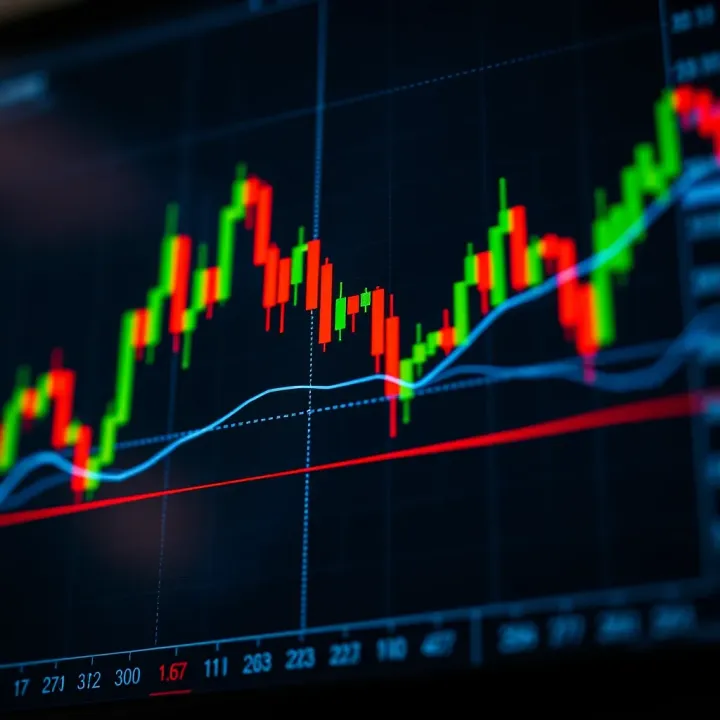
You'll find practical tips tailored for Pakistan's financial context, along with clear explanations that won't drown you in jargon. If you're a trader, investor, analyst, broker, or educator looking to sharpen your skills, this guide lays out the essentials clearly and pragmatically.
"Mastering charts isn’t about magic—it’s about reading the market’s story correctly and making informed moves."
We'll explore how to spot trends, recognize key chart formations, and use numerical indicators to confirm your views. By the end of this journey, you'll be equipped not just to read charts, but to understand them—giving you an edge in a market where every decision counts.
Trade charts are the backbone of modern trading. They show the price action of stocks, commodities, currencies, or indices over time, allowing traders to trace how markets behave in real time or historically. Without charts, you’re basically guessing what happened or might happen next. Think of trade charts as the map and compass traders use to find their way through the complex terrain of financial markets.
This section lays the foundation, focusing on what trade charts really are and why they matter. It’s important to get these basics clear because understanding charts isn’t just about pretty lines or colors—it’s about decoding market behavior. We’ll break down their components and discuss why they're so practical for spotting opportunities and risks.
A trade chart is a graphical representation of price movements of a financial instrument over a specified time period. Its main purpose is to present complex market data visually, making it easier to comprehend trends, cycles, and key price levels at a glance. For instance, if you’re tracking the Pakistan Stock Exchange's KSE-100 index, a chart reveals whether prices are climbing steadily or swinging wildly.
Traders rely on these charts to grasp what’s going on beneath the surface numbers — you can immediately see whether demand is pushing prices up or if selling pressure is taking hold. This visualization helps avoid raw guesswork.
Every trade chart consists of several key elements you should know:
Time axis (X-axis): Shows the timeframe—could be minutes, hours, days, or months.
Price axis (Y-axis): Displays price scale for the financial instrument being tracked.
Price Plot: The line, bar, or candlesticks that represent price changes.
Volume Indicator: Often shown below the main chart, it reveals how many shares or contracts were traded.
Together, these components tell a story. For example, a sharp price increase accompanied by high volume often signals strong buying interest, not just a random bounce.
Trade charts provide a window into how prices fluctuate minute by minute or over longer stretches. This insight helps traders catch the rhythm of the market. For instance, spotting a steady upward trend over weeks can encourage a trader to enter a position early, while a sudden drop might be a warning sign to exit or hold back.
Without charts, tracking every price change would be like trying to catch raindrops with a sieve. With charts, you see the bigger patterns emerge from the noise.
Charts act as a decision-making aid by clarifying market conditions. When paired with other tools like moving averages or volume analysis, they can highlight potential entry and exit points. For example, a trader looking at a candlestick chart might recognize a “hammer” pattern, suggesting a possible rebound.
Such visual clues reduce emotional decision-making and back trading choices with data. This is especially helpful in fast-moving markets like those on the Pakistan Stock Exchange, where timing can make or break a trade.
Good traders don’t just guess—they interpret charts to make informed decisions based on proven signals and market behavior patterns.
In sum, this introduction sets the scene by defining trade charts and showing their practical value in helping traders see past raw prices and volumes to make smarter moves.
Trade charts come in various forms, and understanding their differences is key for anyone serious about trading or investing. Each type offers a unique way to visualize price movements and market sentiment, helping traders make more informed decisions. For example, a line chart simplifies complex data, while candlestick charts provide deeper insight into price action. Knowing when and how to use each can improve the timing and accuracy of trades.
Line charts are built by connecting a series of closing prices with a single continuous line. This means you see how the price closes over time, ignoring the highs and lows within that period. For instance, if you look at the Pakistan Stock Exchange (PSX) KSE-100 index, a line chart would plot daily closing prices, giving you a straightforward view of overall movement.
This simplicity makes line charts easy to read but limits how much detail you get. They’re good for spotting overall direction, but you won’t see intraday swings or volatility that can be crucial for short-term traders.
Line charts excel when you want a quick snapshot of long-term trends without the noise of day-to-day price changes. They’re particularly handy for beginners getting their feet wet or for investors focusing on big-picture market movements.
For example, if you’re an investor at Habib Bank Limited (HBL) looking to see whether the stock has generally been rising or falling over the past year, the line chart offers a clean and simple visualization.
Bar charts add more layers of information compared to line charts. Each bar represents a trading period (like a day), showing the open, high, low, and close prices. The vertical line indicates the price range, with tiny horizontal dashes on the left and right representing the open and close, respectively.
Say you’re analyzing Engro Corporation’s stock performance. A bar chart tells you not just the price movement but also at which points the stock opened and closed, as well as the extremes during the session. This helps you understand the volatility and the day's trading strength.
Bar charts are great for capturing market dynamics in detail. They let traders gauge momentum by comparing where the price opened versus where it closed and understand daily price swings.
If you notice a long bar with a narrow body in a bar chart, it suggests high volatility but little net movement, a detail lost on simpler charts. For instance, during a political uncertainty period in Pakistan, this kind of pattern can signal indecision among traders.
Candlestick charts are visually rich and far more popular among traders for a reason. Each candle shows the period’s open, high, low, and close prices much like bar charts, but the body (the part between open and close) is filled or colored.
Typically, a green or white candle indicates the price closed higher than it opened (bullish), while red or black shows it fell (bearish). The "wicks" or shadows extending from the body reveal the session’s high and low, painting a fuller picture of market sentiment.
Think of the candle as a mini story of the trading session, offering clues about who had control — the bulls or the bears.
Patterns formed by one or multiple candlesticks can hint at possible market moves. For example, a “Doji” candle, where the open and close are almost the same, suggests market indecision. In contrast, a “Hammer” at the bottom of a downtrend might signal a potential reversal.
Practically, if you spot a Hammer pattern in the PSX after a series of bearish candles, it could hint that selling pressure is fading and an upward move might be on the cards. Similarly, “Engulfing” patterns often indicate strong reversals.
Understanding these nuances in candlestick patterns is like reading market moods. For traders in Pakistan, this can offer timely signals amidst the volatility caused by economic announcements or political shifts.
In the end, knowing the strengths of each type helps you pick the right one for your trading style. Line charts offer simplicity, bar charts bring more detail, and candlestick charts offer an emotionally nuanced picture of market moves. Familiarizing yourself with each type is the foundation of chart-based trading analysis.
Understanding how to read and interpret trade charts is a must for anyone serious about trading. These charts are not just colorful lines and bars—they tell a story about the market’s current mood and possible moves ahead. By learning to decode this story, traders and investors get a clearer view of price action and can make better-informed decisions.
When you look at a trade chart, you’re not just seeing prices; you’re witnessing the tug of war between buyers and sellers. Interpreting trends, volume shifts, and the choice of time frames can help you spot opportunities before they fully unfold.
Price trends give you a clue about where the market’s headed. An upward trend is like a gentle uphill climb—a series of higher highs and higher lows. It signals that buyers are stronger, pushing prices higher. For instance, if the KSE-100 index steadily rises over a few weeks, it’s a sign that market sentiment is positive.
On the flip side, a downward trend shows lower highs and lower lows, indicating selling pressure. Spotting these trends early can help you ride the wave instead of getting caught in a sudden drop. You might use a moving average to confirm these trends—if the price stays above the 50-day moving average consistently, it’s often a bullish sign.
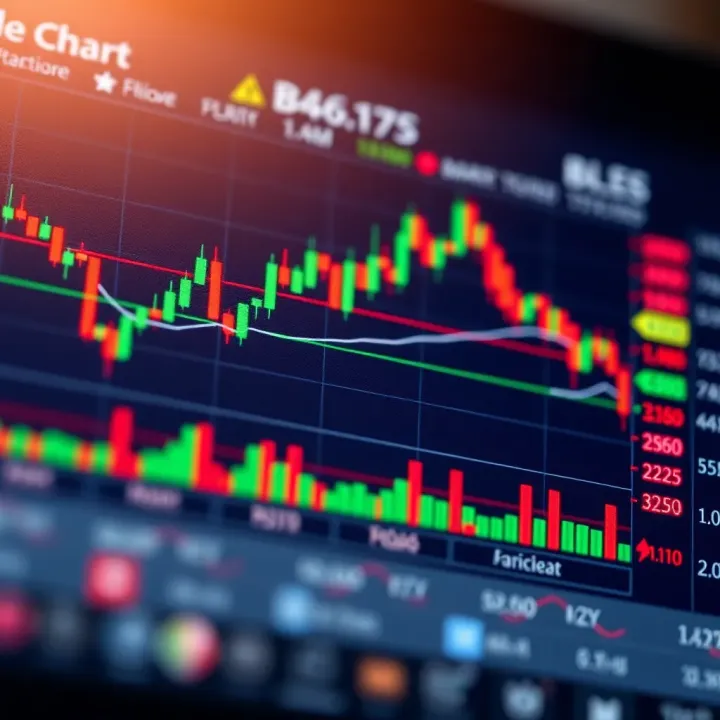
Sometimes, prices don’t give a straight climb or fall. Instead, they move sideways within a range. This means the market's stuck in a tug of war—buyers and sellers are evenly matched. For example, if shares of Engro Corporation trade between 280 and 300 rupees for a few weeks without breaking out, that’s a sideways market.
Recognizing this helps avoid jumping into trades prematurely. Instead, traders might wait for a breakout above or below the range for better entry points. Sideways markets can be frustrating, but they also set the stage for significant moves when the stalemate breaks.
Volume shows the strength behind a price move. Rising prices on high volume tend to be more trustworthy than on low volume. Imagine Pakistan Oilfields Limited’s stock surging by 5% on twice its usual volume—it suggests genuine buying interest, not just a random blip.
Volume confirms whether a trend is real or just a short-lived flicker. A price increase with decreasing volume might signal weakening demand, hinting the trend could fizzle out soon. Keeping an eye on volume gives traders a reality check on the price action.
Sudden spikes or drops in volume often precede big price moves or trend reversals. For instance, if Fauji Fertilizer closes with unusually high volume, it might mean insiders are accumulating or distributing shares, or news is about to break.
Unusual volume can alert you early to these shifts. However, it’s crucial to pair volume observations with other chart patterns or indicators for confirmation, as volume alone can sometimes be misleading.
Choosing the right time frame depends on your trading style. Short-term charts—like 5-minute or hourly charts—are great for day traders looking to catch quick moves in S&P Shariah stocks, for example. They show immediate price changes but can be noisy.
Long-term charts, such as daily or weekly charts, smooth out short-term blips and reveal bigger trends. Investors with a longer horizon, looking at the PSX market over months or years, find these charts useful for strategic decisions.
If you pick the wrong time frame, you may miss the bigger picture or get lost in short-term noise. A common mistake is to rely only on very short-term charts, which can make the market look unpredictable when it’s just minor fluctuations.
It’s wise to start with a higher time frame to understand the main trend, then drill down into shorter frames for better entry or exit points. For example, a weekly uptrend confirmed with a daily pullback might offer a safer buy opportunity.
Reading trade charts isn’t a one-time skill; it’s a habit. Regular practice in spotting trends, volume changes, and choosing the right time frames makes your trading more grounded and less guesswork.
By mastering these aspects of trading charts, you lay a solid foundation for navigating Pakistan’s markets more confidently and efficiently.
Recognizing common patterns on trade charts is a skill every trader should cultivate. These patterns serve as road signs on the price journey, signaling potential reversals or continuations of the current trend. For anyone working with Pakistani markets or beyond, understanding these shapes helps avoid guessing games and makes trading decisions more grounded.
Patterns often form due to collective trader psychology — fear, greed, hesitation — which gets imprinted on the charts. Spotting them early can mean the difference between riding a profitable wave or getting caught on the wrong side of a move.
The head and shoulders pattern is one of the most recognizable reversal signals. It typically appears after an uptrend and hints at a bearish reversal. Imagine it as a peak (shoulder), followed by a higher peak (head), then another lower peak (shoulder) — like a rough outline of a head and two shoulders on the chart.
In practice, when the price breaks below the neckline connecting the two troughs, it confirms the reversal and often triggers a sharper sell-off. Pakistani traders watching the PSX might catch this pattern around major stocks like ENGRO or HBL during volatile periods.
Why it matters: This pattern helps traders identify when bulls are losing steam and sellers might be taking over, offering a chance to exit long positions or prepare for shorts.
Double tops and double bottoms are simpler reversal patterns to spot. A double top looks like two peaks hitting roughly the same resistance level before price heads down. Conversely, a double bottom shows two similar troughs suggesting a support floor before prices bounce back up.
These formations indicate struggle: the market tests a price level twice but fails to break through, which can signify a shift in trend direction. For example, in a volatile session tracking the MCB stock, you might see a double bottom indicating a solid entry point to buy.
Actionable tip: Pay attention to volume during the second peak or trough; if volume confirms, the reversal signal is stronger.
Triangles are shaped when price consolidates between converging trendlines, and they come in three varieties: ascending, descending, and symmetrical. They represent a pause before the original trend continues.
For instance, an ascending triangle during an uptrend indicates buyers are gaining steam — it’s generally bullish. Pakistani traders might see such patterns on software or tech stocks when markets are gearing up to break out.
Triangles are practical because they provide clear entry points: a breakout beyond the triangle's boundary suggests a new leg in the trend, often with an increase in volume confirming it.
Flags and pennants are short-term continuation patterns indicating a brief rest before the trend resumes. Flags look like small rectangular channels slanting against the trend, while pennants form small symmetrical triangles.
Imagine a strong upward move in the oil sector stocks like PSO, followed by a small flag pattern; it's a breather before prices push higher. These patterns are especially useful for traders dealing with intraday or short-term moves.
To use flags and pennants effectively:
Confirm the flagpole, which is the sharp price move leading into the pattern.
Wait for a breakout in the direction of the prior trend.
Use volume spikes to validate the breakout.
Understanding these chart patterns lets traders anticipate market moves more confidently. They don’t work every time, but combined with other tools like volume analysis and indicators, they add a valuable layer of insight.
In Pakistan’s market context, with its unique volatility and external influences, spotting these common chart patterns can offer a sharper edge, helping traders make better-timed decisions and manage risk effectively.
Trade charts provide the visual backbone for analyzing market data, but integrating technical indicators can significantly boost a trader’s ability to read the market more intelligently. Indicators act like extra lenses, highlighting subtle signals that might otherwise be missed in raw price movements alone. By combining chart patterns with these indicators, traders in Pakistan—the Pakistan Stock Exchange included—can get a clearer picture of when to enter or exit trades.
Technical indicators aren’t magic wands, though. They are tools that need understanding and context. For example, what works well on a highly liquid stock like Oil & Gas Development Company might not be as effective on a less volatile security. It’s important to choose indicators that complement the chart type and the timeframe you’re analyzing.
Moving averages smooth out price data, creating a clearer trend direction. The two main types are Simple Moving Average (SMA) and Exponential Moving Average (EMA).
SMA calculates the average of prices over a set period, giving equal weight to every price point.
EMA gives more weight to recent prices, reacting faster to the latest price changes.
Why does it matter? If you’re trading volatile assets, like some active stocks during earnings season, EMA might catch shifts quicker than SMA. But SMA offers a more stable, lagging signal that can filters out noise during sideways markets.
Consider a 20-day EMA and a 50-day SMA on the Karachi Stock Exchange: the EMA might signal a trend change earlier, helping traders spot opportunities before everyone else jumps in. However, it can also give false alarms during erratic market moves.
Moving averages help in spotting the general direction of the market. When a shorter moving average crosses above a longer one, it often signals an uptrend; the reverse crossover suggests a downtrend.
For instance, if the 10-day EMA crosses above the 50-day SMA for a stock like Lucky Cement, it might indicate the start of a bullish phase. Many traders use this "golden cross" as a buy signal.
Using moving averages also helps filter out daily market noise, making it easier to focus on the bigger picture. But be cautious—a moving average alone isn't foolproof. Consider combining it with other indicators or volume trends for confirmation.
RSI is a momentum indicator that shows how fast and how far prices have changed over a period, usually 14 days. Its values range from 0 to 100.
Readings above 70 suggest the asset may be overbought.
Values below 30 imply it might be oversold.
Think of RSI as a speedometer for price movements. For example, during a frantic buying spree in Pakistan’s banking sector stocks, RSI might shoot past 70 quickly, hinting traders that the rally could be stretching too far.
When RSI crosses above 70, it’s a red flag that the asset may be due for a pullback, as buying might have pushed prices too high, too fast. Conversely, an RSI below 30 could mean that sellers have pushed prices down excessively and a bounce might be coming.
However, in strong trends, RSI can stay overbought or oversold for extended periods. So, RSI shouldn’t be used alone but rather alongside price action and other indicators.
A classic example: If the RSI for Engro Corporation stays above 70 in a strong uptrend, it might not immediately signal a sell. Traders wait for RSI to dip back below 70 or notice a bearish divergence (price making new highs but RSI not) for clearer evidence.
MACD is a versatile indicator showing the relationship between two EMAs, commonly the 12-day and 26-day.
It has three main parts:
The MACD line: difference between the 12-day and 26-day EMA.
The Signal line: 9-day EMA of the MACD line.
The Histogram: difference between the MACD line and the signal line, showing momentum.
This setup helps traders understand not just trend direction but the strength behind it.
MACD generates buy or sell signals when the MACD line crosses the signal line:
A bullish crossover happens when the MACD line rises above the signal line, often prompting a buy.
A bearish crossover occurs when the MACD line falls below the signal line, signaling a possible sell.
Imagine a trader watching Nishat Mills—when MACD crosses above the signal during an upward price move, it's a nudge to enter the trade. When the MACD crosses down again, it might be time to lock in profits or cut losses.
The histogram also gives early clues about momentum shifts. Increasing bars show momentum picking up, while shrinking bars hint momentum is fading, even before price reversal appears on the chart.
Integrating indicators like moving averages, RSI, and MACD with trade charts helps Pakistani traders not just guess market movements but make data-backed decisions that reduce risk and enhance timing.
Using these tools isn’t about replacing instinct but sharpening it. Every indicator adds a piece to the puzzle, and the more accurately you can read the puzzle, the better your trading outcomes will be.
Using trade charts effectively in Pakistan's markets means taking a grounded approach that fits local realities. This section highlights practical tips to get the most from charts while trading or investing on the Pakistan Stock Exchange (PSX). Good chart reading habits here involve adapting to the market's quirks, picking the right tools, and steering clear of usual pitfalls.
The PSX has its own rhythm – different from the big global bourses you might be used to. For instance, the market size is relatively smaller, and few stocks dominate trading volumes. This means liquidity is often limited, causing price jumps that might look like false signals on charts. Understanding this helps avoid misreading sudden spikes or drops.
Another feature is that the PSX closes every Friday and long holidays, which can sometimes lead to pile-ups of orders impacting next-day openings. Being aware of these timing quirks is crucial when choosing time frames for charts or when interpreting gaps between trading sessions. For example, volume might surge after Eid holidays as investors rush to act on accumulated news.
Pakistan's economy and politics have frequent ups and downs that directly impact the market sentiments and price movements. For example, government policy changes, interest rate shifts by the State Bank, or political uncertainty can cause sharp market reactions, often reflected on charts as volatile swings.
Effective traders in Pakistan keep an eye on such factors in tandem with what the charts show. Suppose inflation numbers come in hotter than expected; this could weaken investor confidence and cause a downtrend, even if a chart pattern looks bullish. Including awareness of these external forces helps in making trades that are not just data-driven but context-aware.
Many local traders prefer platforms like PSX’s official trading systems and popular broker-provided terminals such as those from IGI Securities or AKD Securities. On the retail side, apps like TradeX and websites like EasyPaisa also offer accessible charting tools.
International tools such as TradingView and MetaTrader are also widely used because they offer detailed charting, custom indicators, and quick updates. However, it’s vital to confirm that these platforms have accurate and timely data feeds specifically for the PSX.
Not all charting software is created equal. Key features to look for include live price updates (not delayed by several minutes), access to historical data completeness, and the ability to customize indicators like moving averages or volume overlays. For example, a trader using old or incomplete data might get a wrong picture of support or resistance levels.
Also, user-friendly interfaces that allow toggling between time frames quickly can save precious moments in volatile markets. In trading stocks like OGDC or HBL, timely decisions backed by reliable charts can make the difference between profit and loss.
Charts are a powerful tool, but no single tool tells the whole story. It’s easy to get tunnel vision, following patterns blindly without checking other factors like company earnings, sector health, or macroeconomic trends. For instance, a neat "double top" pattern may suggest a reversal, but if Pakistan’s currency suddenly weakens dramatically, the broader market might follow a different path.
Successful traders combine charts with fundamental analysis, news, and risk management, never placing 100% trust on charts by themselves.
Sometimes traders get stuck analyzing one stock’s chart without considering the overall market or sector trend. For example, a bullish setup in a textile company’s chart can fail if the entire textile sector in Pakistan faces headwinds, like rising raw material prices or export restrictions.
Check market breadth indicators, sector performances, and global cues related to commodities or currencies before jumping to conclusions from a chart. This keeps your decision-making grounded and avoids unnecessary losses.
Wise traders know that charts are one piece of the puzzle. Reading market context, economic signals, and current events alongside chart patterns creates a more clear picture, especially in a market as dynamic as Pakistan’s.
By grounding your chart use in these practical tips—tailored to Pakistan’s unique market characteristics—you stand a better chance of making informed, balanced trading decisions. Remember, charts show what’s happened, but knowing why helps shape what’s coming next.
Wrapping things up, understanding trade charts gives you an actual edge when trading or investing. These visual tools aren’t just pretty pictures; they tell you stories about price moves, trends, and volume shifts. Whether you're trading on the Pakistan Stock Exchange or following global markets, charts help cut through the noise to highlight what really matters.
That said, charts aren't magic on their own. Combining them with other analysis methods, like fundamental research or economic indicators, strengthens your decisions. For instance, spotting a bullish candlestick pattern is useful, but knowing the overall market sentiment or political climate adds valuable context, especially in Pakistan where factors like election results or policy changes can shift markets quickly.
The role of trade charts in trading boils down to providing clear, real-time snapshots of market behaviors. They reveal trends, price momentum, and potential reversals, which are crucial for timing trades. For example, understanding a head and shoulders pattern can help you anticipate when a bullish run might end. Charts help visualize data that would be hard to digest in tables or raw numbers.
Importance of combining charts with other analysis tools cannot be overstated. Relying solely on charts can lead to missed signals or false impressions. Pairing technical analysis with economic reports, company earnings, or geopolitical news forms a fuller picture. For example, a sudden drop on the Pakistan Stock Exchange might not only be a chart pattern but also a reaction to a change in interest rates announced by the State Bank of Pakistan.
Practice reading various chart types regularly to build confidence and spot subtle clues. Try comparing line charts, bar charts, and candlestick charts side-by-side on the same stock. This hands-on approach helps cement your understanding of what each chart tells you, like how candlestick colors reflect buying or selling pressure more vividly than simple lines.
Stay updated with market trends by following reliable news from sources like Bloomberg, Reuters, or regional outlets like Dawn Business. Market trends aren’t just about numbers; they reflect ongoing stories about local industry developments, policy changes, and global economic shifts. Keeping your ear to the ground helps you adjust your strategies in time and avoid nasty surprises.
Combining practical chart skills with up-to-date market knowledge creates a toolkit every trader needs—especially in dynamic markets like Pakistan’s.
Ultimately, trade charts are your maps in the trading landscape. Use them wisely, keep learning, and don’t hesitate to combine them with other tools to make informed, smart decisions.
🌍 Learn how trade graphs visualize trade flows and volumes between countries and sectors. Understand types, benefits, limits, and real-world applications. 📊

📊 Explore trade accounts in Pakistan: types, setup, management tips, regulatory details & common mistakes to avoid for smarter trading decisions 🇵🇰
📈 Master trading charts with our guide for Pakistani traders! Learn chart types, trend analysis, tips, and tackle common challenges for smarter trades.

Explore how trading chats shape market talk 🔍, uncover their perks & pitfalls ⚖️, and learn to pick the best chat for your trading style 💬📈.
Based on 14 reviews