

USD to PKR Exchange Rate Forecast and Key Factors
Explore key factors shaping USD to PKR exchange rate 📉🔍, from economic data to political moves, plus what to expect for the Pakistani rupee 💵📈.
Edited By
Liam Foster
The exchange rate between the US dollar (USD) and the Pakistani rupee (PKR) directly affects business decisions, foreign trade, and investor confidence in Pakistan. Predicting its movement involves understanding multiple economic, political, and global factors that influence how many rupees one dollar can buy.
Central to the analysis are economic indicators such as inflation rates, current account deficits, and foreign exchange reserves. For example, rising inflation in Pakistan generally weakens the PKR against the USD, making imports costlier and putting pressure on the central bank to adjust interest rates. Similarly, when Pakistan faces a high current account deficit—spending more on imports than earnings from exports—it creates demand for dollars, pushing the USD/PKR rate upward.
Government policies also shape this rate. Decisions on trade tariffs, foreign debt management, and monetary policies by the State Bank of Pakistan (SBP) determine currency flows and market sentiment. For instance, an increase in SBP’s policy rate usually supports the rupee by attracting foreign investment.
Global events cannot be ignored. Shifts in US Federal Reserve interest rates, fluctuations in oil prices, and geopolitical tensions in the region often cause volatility. For example, higher oil prices raise Pakistan’s import bill, straining the rupee. Meanwhile, changes in remittance flows from abroad—vital for Pakistan’s foreign currency reserves—impact the USD to PKR value too.
Traders and investors should keep a close eye on these dynamics to manage risks effectively.
To sum up, predicting USD to PKR exchange rate requires a balance of monitoring local economic health and global developments. Staying updated with SBP’s monetary policies, inflation trends, and international factors can help businesses and individuals make informed financial decisions, whether for import-export contracts, investments, or budgeting.
Key points to watch:
Inflation and interest rate changes within Pakistan
Current account balance and foreign exchange reserves
Government’s fiscal and monetary policy actions
US Federal Reserve policy shifts and global economic trends
Oil price movements and their impact on Pakistan’s import costs
Remittance inflows and external debt repayments
Understanding these factors provides a clearer picture of how the USD to PKR exchange rate might move in the near future, helping you plan accordingly.
Grasping the dynamics of the USD to PKR exchange rate is essential for traders, investors, and financial analysts working with Pakistani markets. This rate not only affects international trade costs but also influences inflation and investment returns within Pakistan. For example, a sudden depreciation of the rupee against the dollar can raise import costs, pushing prices up and impacting purchasing power. Thus, understanding these movements helps stakeholders make informed decisions and manage risks effectively.
The exchange rate is the price of one currency in terms of another. In this context, it shows how many Pakistani rupees are needed to buy one US dollar. This rate fluctuates constantly due to market forces like supply and demand.
Knowing the exchange rate is practical for businesses importing goods from the US or investors dealing with foreign currency assets. For example, if the exchange rate moves from Rs 280 to Rs 290 per USD, importers will need more rupees to pay for the same dollar-priced goods.
Currencies always trade in pairs, representing the relative value between two currencies. The USD/PKR pair tells you how much PKR you need to get one USD. Traders watch these pairs closely because gains or losses depend on the movement of one currency against the other.
In forex trading, if you expect the rupee to weaken, you might sell PKR and buy USD, aiming to profit from the changing rates. For economists and policymakers, the movement offers insights into economic health and competitiveness.
Spot rates refer to the current exchange rate for immediate settlement, usually within two business days. This rate reflects real-time supply and demand.
Forward rates are agreed-upon rates for currency exchange at a future date. Businesses use forward contracts to hedge against currency risk, locking in a rate to avoid surprises. For instance, an exporter expecting payment in USD three months later may use a forward contract to secure today’s rate and protect profits.
The exchange rate largely depends on how much demand there is for USD versus PKR. Foreign buyers need USD to pay for Pakistani exports, while residents or companies seek USD to pay for imports or invest abroad.
For example, a surge in import bills means higher demand for USD, putting pressure on the PKR to depreciate. Conversely, strong exports or remittance inflows can boost PKR demand, supporting its value.
Key economic indicators such as inflation rate, interest rates, trade balance, and foreign reserves influence the PKR's strength against the dollar. High inflation erodes purchasing power, often weakening the rupee. Likewise, lower foreign reserves limit the State Bank's ability to defend the PKR.
If Pakistan runs a large trade deficit, more USD is needed to cover imports than earned from exports, pushing the PKR lower. Interest rate differentials between Pakistan and the US also affect currency flows, attracting or repelling investment.
The US dollar acts as a global reserve currency and features in many international transactions. Its strength often rises during global uncertainty, attracting investors seeking safety.
If the dollar strengthens against major currencies like the euro or yen, it usually strengthens against PKR too. This global demand affects Pakistan, making the rupee more vulnerable to swings in US economic policy decisions or geopolitical events.
Understanding these fundamental aspects allows businesses and analysts to forecast the USD to PKR rate with more confidence and take timely actions to minimise risks or seize opportunities.
Economic indicators strongly affect the USD to PKR exchange rate by reflecting the underlying health of Pakistan’s economy. Traders, investors, and analysts closely watch these indicators because they signal the direction of the currency’s value. For example, strong inflation or deteriorating trade balances typically weaken the PKR, pushing the exchange rate higher. On the other hand, stabilising foreign reserves or tighter monetary policy often support the rupee.
High inflation in Pakistan, especially persistent inflation above the State Bank’s target range, erodes the real value of the PKR. This makes imported goods more expensive and reduces foreign investor confidence, leading to pressure on the currency. For instance, when inflation surged above 10% in recent years, the PKR depreciated noticeably against the USD, trading around Rs 170 to the dollar.
The State Bank of Pakistan (SBP) uses interest rate adjustments to control inflation and stabilise the PKR. When inflation rises, SBP often raises the policy rate to cool demand and attract foreign capital seeking higher returns. These moves can temporarily support the rupee as foreign investors buy local debt. However, hiking rates too much can slow economic growth. For example, the SBP increased the policy rate several times during FY 2022-23 to contain inflation, which moderately supported the PKR.
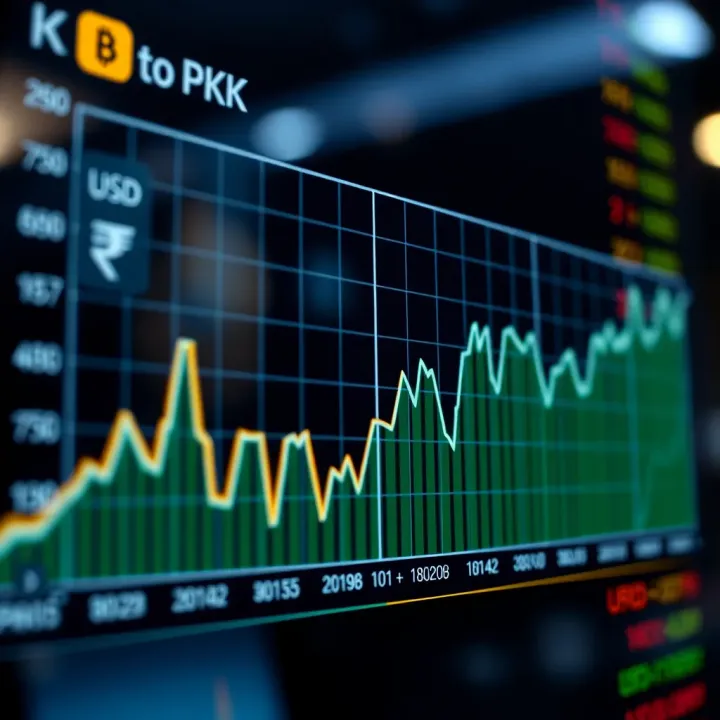
The interest rate gap between Pakistan and the US also affects the USD to PKR rate. If SBP rates are significantly higher than the US Federal Reserve rates, the PKR becomes more attractive to carry traders and portfolio investors. But if the Fed tightens aggressively, it can pull capital back to the US, weakening the PKR. The current environment of rising US rates tends to pressure emerging market currencies like the PKR as dollar demand strengthens.
Pakistan’s large trade deficit, mainly due to higher imports of oil, machinery, and consumer goods compared to exports like textiles and agriculture products, continues to weigh on the PKR. Persistent deficits mean Pakistan needs to find foreign exchange continuously, often putting the rupee under stress. For example, a rising crude oil price spikes import bills, increasing pressure on the exchange rate.
Foreign currency reserves act as a buffer for the State Bank to intervene in the currency market. Healthy reserves enable the SBP to meet demand for dollars, stabilising the PKR during shocks. When reserves fall to critical levels, confidence dips and the rupee usually weakens sharply. Currently, Pakistan’s reserves hover around $9 billion, prompting cautious market sentiment.
A stable currency requires a balanced trade position and ample foreign reserves. A wide trade gap and limited reserves lead to higher volatility and risk for the PKR. Businesses and investors then face uncertain exchange rates, complicating import costs and investment planning. Effective management of these economic indicators remains central to curbing PKR volatility and setting realistic expectations for future rates.
Monitoring these economic indicators gives you a clearer sense of the USD to PKR trend and helps in making informed decisions whether in trading, investment, or business operations.
Government policies and external factors weigh heavily on the USD to PKR exchange rate. The fiscal decisions made in Islamabad, foreign investment flows, and political events both within Pakistan and internationally directly affect the rupee’s value against the US dollar. Traders and investors need to keep an eye on these variables as they often signal shifts in currency trends.
Pakistan’s government relies on borrowing to finance its budget shortfalls, either from domestic sources like banks or international lenders such as the IMF. Higher debt levels increase pressure on the PKR because they raise concerns about debt servicing capacity and macroeconomic stability. For example, when fiscal deficits balloon, the government often turns to the central bank for financing, which can lead to rupee depreciation if not managed carefully.
A high budget deficit usually signals that government spending exceeds revenue, forcing the state to borrow more or print money. This imbalance weakens the rupee as investors anticipate inflation and reduced purchasing power. Conversely, efforts to cut the deficit through austerity or improved tax collection can stabilise the currency. In Pakistan’s context, fiscal discipline has frequently been touted as key to maintaining PKR stability amid fluctuating foreign reserves and external pressures.
Foreign direct investment (FDI) brings much-needed US dollars into Pakistan, strengthening the PKR by increasing forex supply. However, FDI tends to be volatile, influenced by Pakistan’s political climate, security situation, and ease of doing business. For example, large projects under CPEC (China-Pakistan Economic Corridor) have significantly boosted FDI inflows in recent years, helping mitigate rupee pressure temporarily.
Remittances from Pakistanis working abroad provide a steady stream of foreign currency, helping support the PKR. These inflows often surge during festivals like Eid or seasons when expatriates send money home for family expenses. Stable or rising remittances improve forex reserves and cushion the exchange rate against shocks. For traders and analysts, monitoring remittance data offers early warnings of potential currency strength or weakness.
The US Federal Reserve’s interest rate moves greatly influence the dollar’s global strength. When the Fed raises rates, the dollar typically strengthens as investors seek higher yields. This makes the USD more expensive against the PKR, pushing Pakistan’s import costs up and exacerbating trade deficits. For instance, the Fed’s rate hikes over recent years have put sustained pressure on emerging market currencies including the rupee.
Political unrest or tensions in Pakistan's neighbourhood, such as issues along the Afghanistan border or Indo-Pak relations, create uncertainty for investors and currency markets. Instability tends to scare off foreign capital and causes currency sell-off. Conversely, periods of calm and diplomatic progress can ease rupee pressure by encouraging FDI and confidence in Pakistan’s economy.
Pakistan imports large volumes of oil and commodities priced in dollars, so rising global commodity prices increase import bills and put downward pressure on the PKR. For example, a spike in oil prices raises fuel and transport costs locally, leading to higher inflation and weakening currency. Traders should track commodity trends as they provide clues on Pakistan’s forex demand and PKR outlook.
Maintaining a close watch on government policies and external factors is key to understanding USD to PKR exchange rate movements. These forces often trigger shifts before technical markets react, offering valuable insights for investors and traders.
Examining recent trends and data for the USD to PKR exchange rate gives a practical understanding of how the currency pair behaves. It sheds light on factors driving the rupee’s value against the dollar day-to-day and over longer periods. For traders and investors, this analysis can signal profitable entry and exit points, while policymakers can gauge the effectiveness of their measures.
The past five years have seen the PKR weaken steadily against the USD, moving from around Rs 105 in 2019 to roughly Rs 285 by early 2024. This gradual depreciation reflects underlying economic challenges in Pakistan such as trade deficits, inflation, and rising debt levels. Observing this trend helps investors understand that the rupee faces structural pressures rather than random fluctuations.
For example, the steep declines in 2022 coincided with heightened inflation and a drop in foreign reserves, signalling broader economic stress. Recognising such patterns allows businesses to anticipate import costs and plan budgets more accurately.
The exchange rate has not moved smoothly; significant spikes happened amid political uncertainty or external shocks. For instance, when global oil prices surged during 2022, Pakistan’s import bill ballooned, triggering rupee depreciation temporarily beyond the ongoing downtrend.
Conversely, brief recoveries in value often followed foreign remittance boosts during festive periods like Eid, when overseas Pakistanis send bulk funds home. These short-term fluctuations offer opportunistic windows for forex traders who watch news cycles closely.
Speculation plays a considerable role in daily USD/PKR movements. Forex traders react swiftly to news—whether a policy announcement by the State Bank of Pakistan or geopolitical updates—causing quick price changes. For instance, rumours about IMF programme delays can prompt speculative selling of PKR, intensifying its fall against USD.
While speculative trades add volatility, they also enhance liquidity, making it easier for businesses to convert currency without large spreads. Traders need to balance quick gains with risks from sudden market sentiment reversals.
To stabilise the PKR, the State Bank of Pakistan (SBP) occasionally intervenes by selling dollars from its reserves or adjusting its policy rates. These steps aim to curb excessive volatility and support market confidence.
For example, during a sudden PKR drop in mid-2023, SBP sold over $500 million forex from reserves to meet demand and slow depreciation. Though such interventions can only temporarily influence the exchange rate, they reassure businesses and investors about the central bank’s commitment to stability.
Understanding recent trends and short-term sentiments enables more informed forex trading decisions and sharper business forecasting in Pakistan’s dynamic market.
Forecasting the USD to PKR exchange rate helps businesses, investors, and policymakers plan their strategies effectively. Because the exchange rate affects import costs, export competitiveness, inflation, and foreign investment, knowing the likely future movement of USD to PKR is valuable. For example, importers can decide when to convert dollars to rupees to minimise costs, while exporters can prepare for fluctuating foreign income. Analysts also use forecasts to advise clients on risk management and hedging.
More importantly, accurate predictions help government agencies set monetary and fiscal policies that stabilise the rupee. Given Pakistan's vulnerability to external shocks, such as oil price changes and US monetary policy shifts, forecasting guides timely interventions.
Most economists agree that the PKR will remain under pressure due to Pakistan's persistent current account deficit, rising inflation, and debt servicing needs. However, the degree and speed of depreciation vary across forecasts. For instance, while some experts expect a gradual weakening aligned with inflation differentials, others warn of sharper declines if political instability worsens or foreign reserves fall unexpectedly.
Their analyses often consider factors like SBP policy decisions, IMF loan disbursements, and remittance trends. This consensus guides businesses and investors in setting realistic expectations and preparing for currency volatility.
Currently, expert forecasts suggest the USD to PKR rate might hover between Rs 285 and Rs 305 in the next 12 months. This range reflects ongoing pressures from external debt repayments and fluctuating commodity prices. For example, a spike in global crude oil prices could push the rupee to the upper limit, while timely foreign inflows might steady it near the lower bound.
Such a range helps import-dependent industries plan budgets and pricing, while banks calibrate forex reserves and hedging products accordingly.
Political turmoil, such as government changes or policy unpredictability, tends to spook foreign investors and weaken the rupee. After all, uncertainty delays foreign direct investment (FDI) and disrupts trade flows. For example, sudden resignations or protests causing legislative paralysis may lead to short-term currency depreciation as investors seek safer assets.
Moreover, political instability often forces the government to prioritise emergency financing, straining foreign reserves and raising risk premiums.
The PKR is sensitive to global economic shifts, especially changes in US Federal Reserve policies and commodity markets. A US interest rate hike could strengthen the dollar, putting downward pressure on the rupee as capital flows towards US assets. Similarly, volatility in oil and food prices directly influences Pakistan's import bill, affecting the balance of payments and exchange rate.
For instance, the 2022 surge in energy prices led to increased pressure on Pakistan’s trade deficit, pushing the rupee downwards. Hence, global uncertainty requires constant monitoring.
Policy decisions inside Pakistan, like changes in tax rates, subsidies, or export incentives, impact the rupee’s value quickly. Likewise, the State Bank's interventions through interest rate adjustments and market operations can either stabilise or unsettle the currency.
For example, a sudden increase in the policy rate may attract foreign portfolio investment, supporting the rupee. On the other hand, delayed reforms or fiscal slippages could heighten depreciation risks. Thus, market participants watch policy announcements closely to adjust their positions.
Effective forecasting of USD to PKR, backed by expert views and awareness of risks, empowers stakeholders to make smarter financial choices.
Currency fluctuations directly affect how businesses operate and how consumers feel the pinch in their daily lives. For Pakistani businesses dealing in imports and exports, understanding these implications is vital to manage costs effectively and stay competitive. Meanwhile, consumers face changing prices on goods and services, making it essential to adapt spending habits accordingly.
Import and export cost management plays a key role in shielding businesses from the unpredictability of the USD to PKR exchange rate. For instance, a sudden depreciation of the rupee means importers pay more in PKR for the same dollar-priced goods, raising costs sharply. Exporters, on the other hand, might benefit because their products become cheaper for buyers paying in dollars, potentially boosting sales. Firms that keep a close eye on currency trends can adjust pricing strategies or negotiate contracts with suppliers and buyers to balance these effects.
Many Pakistani textile exporters experience this firsthand. When PKR weakens, they gain a pricing edge internationally, but at the same time, input costs like imported yarn or machinery rise. Careful budgeting and contract terms that reflect currency movements help them stay afloat.
Hedging strategies for businesses provide another layer of protection. By using financial tools such as forward contracts or options, companies can lock exchange rates ahead of time, avoiding sudden shocks. For example, an electronics importer in Karachi might enter a forward contract to buy USD at a fixed rate for payment due in three months. This approach reduces uncertainty and helps with accurate financial planning.
While hedging has costs, it often outweighs the potential losses from unexpected currency shifts. Pakistani banks and brokers often offer tailored hedging options suitable for different industries and scales of operation. However, not all businesses use these tools effectively, sometimes exposing themselves to unnecessary risks.
A depreciated PKR usually pushes up import prices, feeding directly into higher inflation. Items like petrol, electronics, and raw materials become costlier, eventually reflected in consumer prices across sectors. This trend tightens household budgets, especially for city dwellers dependent on imported goods or those living in export-linked industries who see wage hikes lagging behind rising costs.
Inflation driven by currency depreciation is one of the main reasons for rising living costs in Pakistan, directly impacting consumer purchasing power.
Consumers can cope with these pressures by adjusting their spending patterns and seeking more cost-effective options. For example, choosing local brands over imported ones, buying in bulk when prices are favourable, or delaying non-essential purchases helps stretch budgets. Also, tracking price movements and planning major expenses around salary inflows can make a noticeable difference.
Awareness of the exchange rate dynamics and their trickle-down effects empowers both businesses and consumers to take proactive steps, whether through financial planning, diversifying suppliers, or adjusting consumption habits. This readiness is especially necessary given the ongoing volatility in global markets and Pakistan's own economic environment.
Explore key factors shaping USD to PKR exchange rate 📉🔍, from economic data to political moves, plus what to expect for the Pakistani rupee 💵📈.

Explore key factors impacting USD to PKR 💵 exchange rates including economic data, policies, and global events 🌍 for smarter currency forecasts 📈.
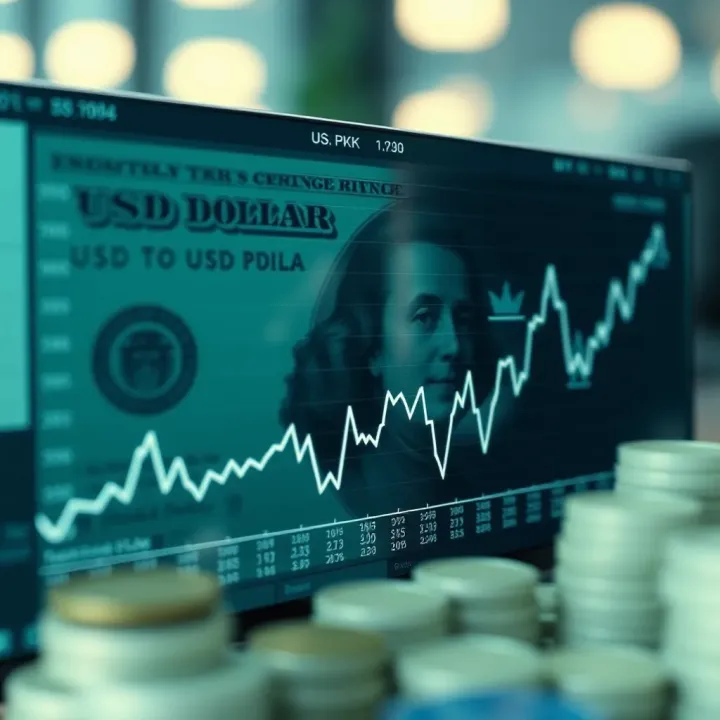
Explore the future of USD to PKR exchange rate with insights on economic trends, govt policies, and global factors affecting your investments 📊💸

📊 Get the latest insights on USD to PKR exchange trends, economic factors, and political shifts shaping the rate next month. Stay ahead in currency moves! 💵📉
Based on 12 reviews