
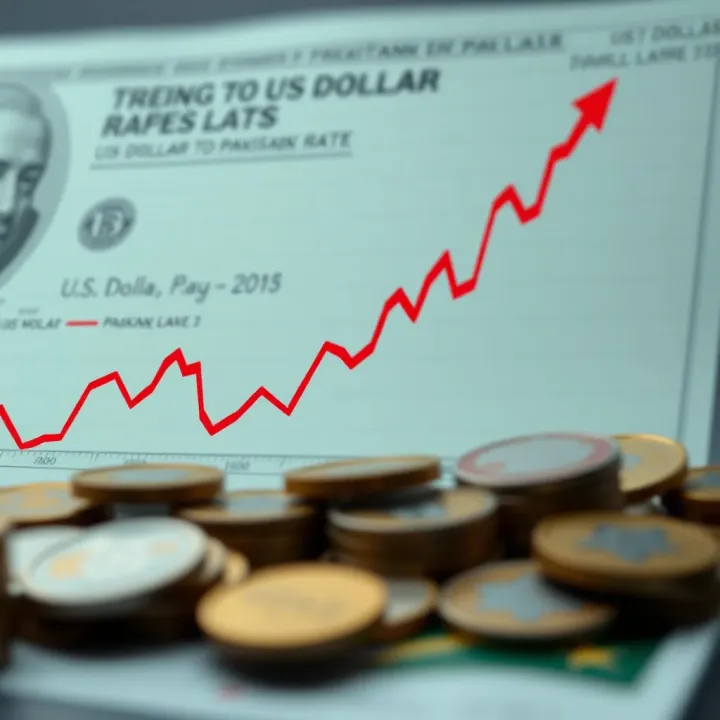
Dollar Price Prediction in Pakistan: Key Factors & Trends
📉 Explore factors shaping the US dollar price against the Pakistani rupee, including economic data, government moves, and global events influencing future exchange trends.
Edited By
William Clarke
Gold prices hold significant weight in Pakistan's economy, influencing investors, traders, and consumers alike. Over the years, gold has been more than just a luxury; it's a common asset for wealth storage and a hedge against inflation. For those involved in the financial markets, understanding the forces behind gold price movements is key to making informed decisions.
Several factors shape gold prices locally and globally. Economic indicators like inflation rates, currency stability, and interest rate changes have clear impacts. For instance, when the Pakistani rupee weakens against the US dollar, gold prices tend to rise since investors seek safer assets. Similarly, geopolitical tensions in regions affecting supply chains can push prices upwards.

In Pakistan, local demand during festivals like Eid and weddings sharply influences gold rates. Traders notice spikes in buying around these periods, which can drive short-term price hikes. Additionally, import duties and taxes imposed by the Federal Board of Revenue (FBR) add to the cost, affecting the final retail price.
Modern techniques for predicting gold prices combine historical data analysis with current market indicators. Financial analysts often track trends in global markets, alongside monitoring Pakistan Stock Exchange (PSX) movements and central bank policies, especially announcements from the State Bank of Pakistan (SBP). Yet, forecasting remains challenging due to unexpected events like sudden political changes or shifts in US Federal Reserve policies.
"Monitoring gold prices demands a balanced view of both macroeconomic signals and local market behaviour to avoid costly errors in trading or investment."
Key takeaway points for readers include:
Keep an eye on foreign exchange rates, especially the rupee-dollar parity
Follow SBP policies on interest rates and money supply
Watch for geopolitical developments, chiefly in oil-producing regions
Consider local cultural factors that temporarily affect demand
Use a mix of fundamental and technical analysis for better predictions
Understanding these elements helps traders and investors navigate gold price volatility, balancing risk and opportunity. This article will further unpack these factors, while also sharing practical tools for more accurate forecasting in Pakistan’s unique economic environment.
Understanding gold price movements is essential for traders, investors, and financial analysts in Pakistan who want to make informed decisions. Gold does not move in isolation; its price reflects a range of factors including global economic conditions, local market trends, and geopolitical developments. Recognising these patterns helps anticipate price changes and manage risks, especially in a country like Pakistan where gold plays a vital role as an investment and a cultural asset.
Over decades, gold has typically served as a hedge against inflation and currency fluctuations. Its price often rises during times of economic uncertainty and falls when confidence in other assets strengthens. For example, Pakistan saw significant increases in gold prices during economic crises such as the 2008 global recession and more recently following the rupee depreciation in 2022. Understanding these long-term trends helps investors recognise when gold might be undervalued or overpriced relative to its historical norms.
The past few years witnessed sharp gold price movements triggered by notable events. The COVID-19 pandemic pushed gold prices to record highs globally as investors flocked to safe havens. Locally, sudden changes in government policies, foreign exchange controls, and import duties have also spiked prices. For instance, increased taxes on gold imports affected supply, pushing prices upward. Tracking these recent fluctuations alongside global events helps predict shorter-term market behaviour.
Key economic data such as inflation rates, interest rates, and manufacturing output shape gold’s appeal. High inflation lowers the purchasing power of currency, prompting buyers to shift to gold as a store of value. For example, rising consumer price inflation in Pakistan often correlates with increased local gold demand. Similarly, when central banks like the State Bank of Pakistan adjust interest rates, it influences gold’s attractiveness compared to fixed-income securities.
Gold prices often jump during geopolitical tensions, reflecting uncertainty in markets. Conflicts in the Middle East or trade disputes between major economies can lead to spikes in gold demand as a protective asset. For Pakistani investors, regional instability such as tensions along the India-Pakistan border impacts not only domestic confidence but also drives buying in gold as a safe investment.
Gold is priced internationally in US dollars, so fluctuations in the Pakistani rupee (PKR) against the dollar directly affect local gold prices. A weaker PKR makes imported gold costlier, pushing domestic prices up, even if global prices remain stable. For example, when PKR fell sharply in 2022, gold prices in Pakistan increased independently of global trends, highlighting the importance of monitoring exchange rates closely.
Gold holds cultural significance in Pakistan, especially for weddings and festivals, driving consistent demand. Seasonal peaks like during Ramazan and Eid see increased purchases. Moreover, local supply chain factors—including smuggling, import restrictions, and dealer margins—affect availability and prices. Understanding these local market dynamics allows investors and traders to anticipate price changes beyond just global influences.
Grasping gold price movements means looking at both big-picture trends and local factors. This balanced view equips stakeholders in Pakistan to navigate an ever-shifting market with better confidence and precision.
Long-term patterns reveal gold’s role as a hedge
Recent events cause sharp short-term fluctuations
Economic data signals demand shifts
Geopolitical risk boosts safe-haven interest
PKR exchange rates strongly influence local pricing
Cultural and seasonal demand impact market dynamics
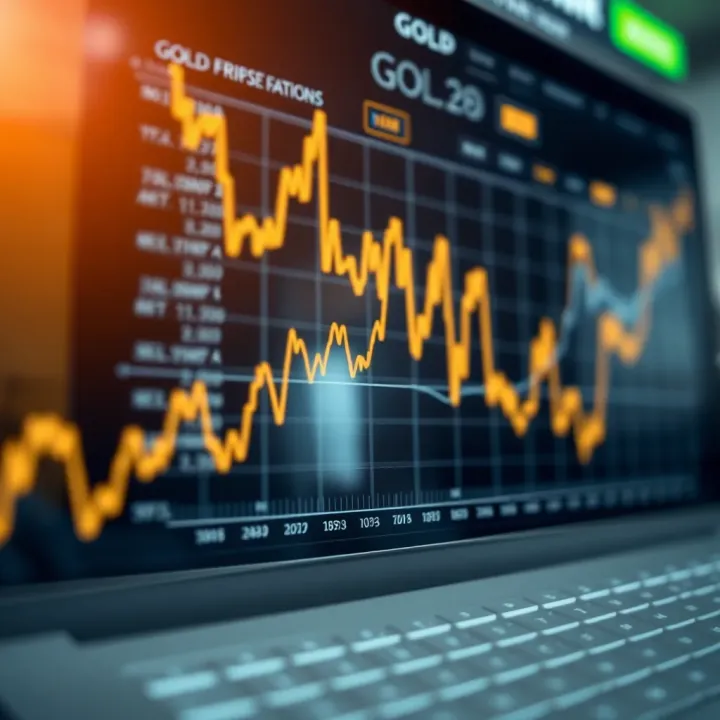
Forecasting gold prices requires a blend of different techniques to navigate its complex market behaviour. Whether you are an investor, trader, or financial analyst, understanding these methods equips you with better tools to anticipate price movements and make informed decisions. From fundamental data reflecting economic realities to technical signals driven by market trends and the psychological mood of traders, each approach offers valuable insights.
Fundamental analysis involves examining economic data alongside gold’s supply-demand dynamics. Economic indicators such as industrial demand, jewellery purchases, and central bank reserves affect gold’s physical market significantly. For instance, a surge in demand for gold jewellery during Eid or wedding seasons in Pakistan can push prices temporarily higher. Similarly, global mining outputs and geopolitical disruptions influence supply levels, which in turn affect pricing.
Monetary policy and inflation rates play a critical role in gold valuation. When central banks like the State Bank of Pakistan (SBP) adjust interest rates, it impacts the attractiveness of gold as a store of value. High inflation typically makes gold appealing because it preserves purchasing power better than cash. For example, when Pakistan experiences rising inflation, investors often flock toward gold, causing its price to climb as demand increases.
Technical analysis focuses on chart patterns and price indicators to predict future gold price movements. Commonly observed patterns like head and shoulders, double tops, or flags help traders anticipate trend reversals or continuations. If a gold price chart shows a ‘bullish flag’ pattern, for instance, it could signal a possible upward breakout, guiding short-term trading decisions.
Moving averages and trend lines further support technical forecasting by smoothing price data and highlighting prominent trends. For example, the 50-day moving average crossing above the 200-day moving average (the "golden cross") often serves as a bullish sign for gold prices. Investors and brokers in Pakistan watch these signals closely for timing buy or sell actions, especially since short-term fluctuations can be quite volatile.
Investor sentiment significantly influences gold prices beyond what fundamental or technical data might suggest. Fear or uncertainty about economic stability, such as during political upheaval or currency devaluation, often leads to increased gold buying as a safe haven. This collective mood can push prices higher even if other indicators remain steady.
Speculative trading also plays a role by amplifying price swings. Traders betting on rapid price changes may create short-term bubbles or corrections that don't align with underlying fundamentals. For example, rumours about policy changes or global crises sometimes trigger sudden gold price jumps or drops in Pakistani markets, reflecting speculation rather than actual demand shifts.
Understanding these forecasting techniques helps you not only anticipate price actions but also manage risks strategically, which is essential in Pakistan’s dynamic gold market.
In summary, combining fundamental analysis, technical signals, and sentiment assessment provides a rounded approach for predicting gold prices, helping you stay ahead of market moves with practical and accurate insights.
Keeping an eye on the current outlook and predictions for gold prices in Pakistan helps investors and traders make informed decisions. Given the gold market's sensitivity to economic and geopolitical changes, understanding the latest developments ensures you don't miss opportunities or face unexpected losses. For example, inflation surges or currency falls can push gold prices up, affecting when you might want to buy or sell.
Inflation tends to eat away at the real value of cash savings, prompting many to turn to gold as a safer store of wealth. In Pakistan, rising inflation has historically caused an uptick in gold purchases, as people look to preserve their money against increasing prices of everyday goods. For instance, when inflation hit around 12% in 2023, demand for gold jewellery and bullion went up noticeably among middle and upper-middle-class buyers.
This reaction results in gold acting like a hedge, where investors expect stable or rising prices despite economic uncertainty. So, if inflation rates seem likely to climb based on the latest State Bank of Pakistan (SBP) data, gold demand—and prices—may rise accordingly.
Gold in Pakistan is mostly imported, priced in US dollars. When the Pakistani rupee weakens against the dollar, importing gold becomes more expensive. This added cost is often passed to buyers, pushing local gold prices higher. A clear example is the sharp PKR depreciation in early 2024, which saw gold prices surge by several hundred rupees per 10 grams within weeks.
Because of this link, traders and investors need to watch exchange rate movements closely. Even slight rupee falls can affect import costs and, therefore, gold prices. Understanding this helps in timing purchases better, avoiding price spikes caused by currency pressures.
Unstable regions often drive investors toward gold as a ‘safe haven’ asset. Pakistan's proximity to conflict zones like Afghanistan and ongoing tensions between major powers impact global markets, indirectly affecting gold demand worldwide and locally. For example, flare-ups in trade talks between the US and China have historically led to global uncertainties, often pushing gold prices up as investors seek security.
These tensions influence Pakistan’s market by increasing demand from both buyers and traders worried about economic fallout. Gold becomes a popular choice amidst such uncertainty, causing short-term price spikes.
Global monetary policies, such as interest rate changes by the US Federal Reserve, impact gold prices significantly. When rates rise, gold often becomes less attractive because it doesn’t pay interest, leading to softer prices. Conversely, rate cuts tend to boost gold demand.
Since Pakistan’s economy is linked to global trends through trade and investment, such policy decisions ripple here too. For example, if the Fed delays rate hikes due to global economic slowdowns, gold prices in Pakistan can respond quickly, usually increasing in anticipation.
Staying updated on both economic and geopolitical shifts allows for smarter gold investment decisions, helping you ride the ups and downs of the market with more confidence.
Accurately forecasting gold prices is a tough task, especially because of the various unpredictable factors and inherent limitations within existing forecasting models. Understanding these challenges helps investors and traders manage expectations and risks better when making decisions.
Speculative bubbles and sudden price shifts can disrupt the normal patterns observed in gold prices. For instance, during periods of excessive optimism, investors might rush to buy gold, pushing prices to levels that are not supported by fundamentals. Such bubbles often burst abruptly, leading to sharp price drops. In Pakistan, even rumours or political developments can accelerate speculative trading, causing sudden gold price spikes or falls within days or even hours.
These rapid fluctuations make timing purchases or sales tricky. Investors relying solely on past trends may find themselves caught in unexpected price swings. This volatility demands that buyers and sellers remain cautious and avoid making hasty decisions based on short-term movements.
Unforeseen global events and economic shocks also play a significant role in gold price unpredictability. Events like sudden interest rate changes by the State Bank of Pakistan (SBP), unexpected geopolitical tensions, or global crises such as pandemics tend to disrupt markets unpredictably. For example, when oil prices jump due to Middle East tensions, it can cause inflation fears, pushing gold prices up quickly.
Such shocks often amplify currency fluctuations—in particular, how the Pakistani rupee behaves—even within short spans. Since gold is imported in dollars, a sudden rupee depreciation can increase local gold prices suddenly, irrespective of global gold price trends. This makes predictions harder, as local economic shocks combine with international developments.
Many forecasting models depend heavily on historical data, assuming past price behaviours will indicate future trends. However, gold prices react to new, often unexpected information, which historical data can’t capture. For example, no model could have accurately predicted price impacts of COVID-19 lockdowns when conditions drastically changed overnight.
This dependence means that models sometimes miss sudden turning points or shocks unique to the current economic situation in Pakistan or globally. Investors relying fully on these models can be blindsided by events that have no precedent in the data used to build the forecasts.
Another challenge is the difficulty in modelling complex interactions among the many factors that influence gold prices. Price movements stem from a mix of economic indicators, geopolitical issues, currency fluctuations, and market psychology, all playing out simultaneously.
For instance, a political crisis in Pakistan can affect the rupee, inflation expectations, and investor sentiment at the same time. Traditional models may not account for how these multiple forces interact dynamically, often oversimplifying or ignoring subtle connections. This complexity makes precisely forecasting gold prices an ongoing challenge for analysts and automated systems alike.
Investors should view gold price predictions as guidance rather than absolute forecasts, keeping in mind the unpredictable nature of markets and the limits of current analytical tools.
Understanding these challenges equips traders, analysts, and investors in Pakistan to approach gold market insights more realistically, helping them develop strategies that consider uncertainties rather than relying on perfect predictions alone.
Gold remains a preferred asset in Pakistan, not just for investment but also for cultural reasons. Navigating its market effectively requires practical tips tailored to local conditions, given the unique mix of economic and geopolitical factors at play here. This section offers actionable advice to help buyers and investors make smarter decisions amid the volatile gold market.
Timing based on market cycles: Gold prices tend to move in cycles influenced by global economic trends, inflation rates, and political uncertainties. For instance, during periods of high inflation or currency depreciation — like when the Pakistani rupee falls against the dollar — gold prices usually rise. Investors should watch these trends closely to time their purchases when gold prices are relatively low. Buying gold before anticipated economic turbulence, such as coming elections or geopolitical tensions in the region, can also lock in value before prices climb.
However, these cycles are not always predictable. Seasonal demand peaks around Eid or wedding seasons often push prices higher locally, so buying just after these periods might save you some money. Sellers benefit by timing withdrawals during these high-demand periods. Understanding such local patterns adds an edge to timing your entries and exits in the gold market.
Managing risks in a fluctuating market: Gold prices can swing sharply due to sudden global shocks or shifts in monetary policy. Diversification is key; instead of putting a large sum into gold alone, spreading funds across different assets can reduce exposure to sudden price drops. Also, avoid buying gold purely on speculative interest or short-term price movements.
Setting clear budget limits and exit strategies before investing helps avoid panic selling during downturns. For example, if you buy gold coins as an investment, decide whether you aim to hold long-term as a hedge or seek short-term gains. Being aware of the costs associated with buying and selling — like making charges and taxes — helps manage profitability better.
Local jewellers and bullion dealers: Trusted local jewellers and bullion dealers provide hands-on insights about the current market trends and supply conditions. Many have years of experience and can warn about spikes caused by local demand or import delays. For example, during the monsoon season, import restrictions might affect the bullion supply, pushing prices up.
Building a rapport with reputable dealers in Karachi, Lahore, or Islamabad can also help you negotiate better prices and confirm the authenticity of gold products. Ensure you verify their licences and check for PTA-approved gold ornaments when shopping.
Online platforms and price indexes: Websites and apps that track live gold prices offer real-time data, helping investors react quickly. Platforms like the Pakistan Mercantile Exchange (PMEX) and other financial news portals provide hourly updates and trends analysis, often incorporating international market changes.
Following these sources, alongside official data like SBP reports on currency movements, allows you to cross-check price claims from dealers and avoid being overcharged. However, always consider the local premium over international prices due to import duties and market demand, which online indexes may not fully capture.
Staying informed through reliable channels, coupled with clear timing and risk management strategies, boosts your chances of success in Pakistan’s dynamic gold market.
📉 Explore factors shaping the US dollar price against the Pakistani rupee, including economic data, government moves, and global events influencing future exchange trends.
📊 Explore detailed CFX price predictions with insights on market trends, risks, and opportunities tailored for Pakistani investors looking to enter crypto trading today.
Explore the BGB price trends in Pakistan 📈, factors shaping the market, and smart tips for buyers and sellers to make informed decisions.
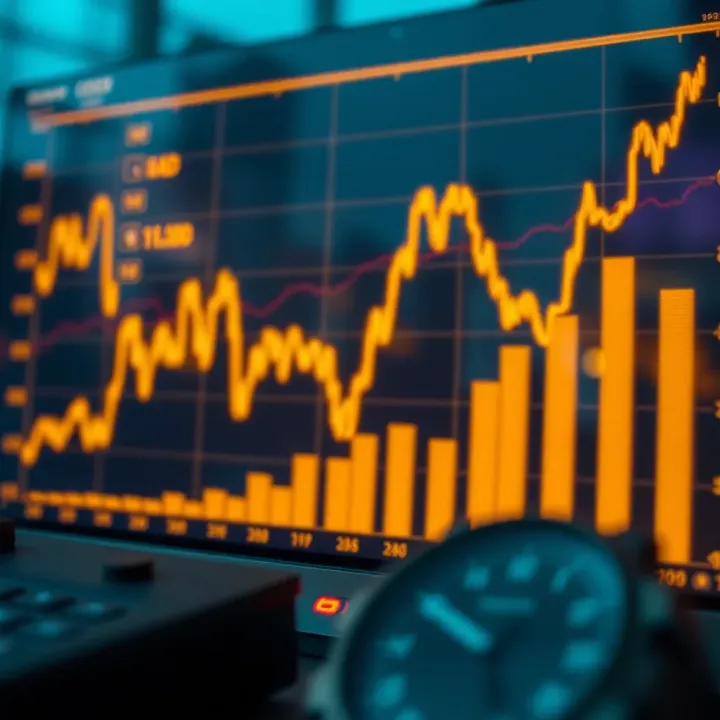
🔍 Get today's gold price forecast in Pakistan with insights on economic indicators, global influences, and market sentiment for smart investing.
Based on 7 reviews